Bournemouth, Christchurch and Poole strictly ban overnight sleeping and camping on their beaches
Fifteen miles of Dorset seafront, patrolled around the clock, with £1,000 at the end of it. What the ban actually covers, why it's prosecution rather than a parking ticket, and how this affects van life
Dorset patrols its seafront around the clock. Fifteen miles of it, all night, every night through the summer, specifically to gather evidence for prosecution.
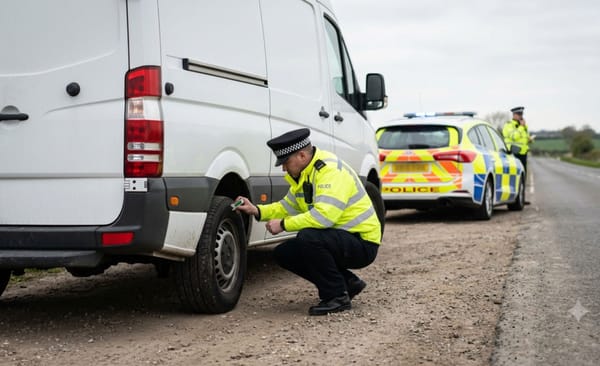
That's not a summary of BCP Council's position. That's roughly how they describe it themselves. The council's own beach guidelines state that no overnight sleeping or camping is allowed on the beach, seafront, cliffs or car parks, and warn visitors to expect to be disturbed, because a 24-hour beach patrol will repeatedly visit to gather evidence for prosecution — with a £1,000 fine at the end of it. BCP Council
Cllr Bobbie Dove, the portfolio holder for community safety and regulatory services, confirmed the security team patrols overnight across the full 15 miles of seafront, dealing with anti-social behaviour, camp fires and camping, and that anyone caught camping risks prosecution and a £1,000 fine. Her suggested alternative for anyone wanting to stay the night is a hotel, a B&B, or one of the hundred-plus campsites across Dorset.
Which is a proper answer if the van is your holiday transport and a useless one if the van is the accommodation. Either way, the number is real and it's worth understanding where it comes from, because a lot of the coverage treats it like a parking ticket. It isn't.
Why it's £1,000 and not £70
A parking fine is a Penalty Charge Notice. Sixty or seventy quid, often halved if you pay quickly, appealable through a process designed for exactly that.
This is a Public Spaces Protection Order, which is a different animal entirely. Failure to comply with a PSPO results in either a Fixed Penalty Notice of up to £100, or prosecution through the magistrates' court with a maximum fine of £1,000. bbci
So the headline figure is the court ceiling, not a ticket you'll find under the wiper. In practice you'd expect to be moved on first, then fined, then prosecuted if you're daft enough to be there again — but "prosecution" is the word the council keeps using, and they use it deliberately.
What's covered, and until when
The coastal PSPO covers beaches, pier approaches and the area up to cliff tops, running from the Ham Common peninsula to Highcliffe. It spans the full 15 miles of the region's coastline, taking in Highcliffe, Sandbanks and Bournemouth beaches, and applies year-round. bcpcouncilBCP Council
The Coastal and Open Spaces PSPOs run until midnight on 6 November 2026. BCP Council
That date matters. A PSPO has a fixed life and has to be reviewed and consulted on before it's extended. If you have an opinion about how this is being handled, the consultation is the only point at which anyone is obliged to listen, and it's coming this autumn.
The car park question, which nobody has answered clearly
Here's where it gets murky, and how this affects van life and van dwelling.
BCP's beach guidelines say overnight sleeping and camping isn't allowed on the beach, seafront, cliffs or car parks. BCP Council
But the council originally consulted on three PSPOs. The second one covered highways and car parks — an area running from the coast inland to the major boundary roads — and specifically prohibited overnight sleeping in vehicles. That one was not taken forward. The portfolio holder at the time said implementing it would have been open to legal challenge. bcpcouncilbbci
So the order that would have explicitly made sleeping in your van in a BCP car park a PSPO offence was the one that got dropped, on legal advice. And yet the public guidance still lists car parks.
There are two possible explanations. Either car parks are covered by something else — a parking order, a byelaw, terms and conditions of the car park itself — or the guidance is stating a broader position than the order behind it supports. I don't know which, and I'm not prepared to guess on something that could cost you a magistrates' court appearance.
What I'd say with confidence: the beach, the promenades, the cliffs and cliff tops are unambiguously covered. If you're on the sand or the front, there's no argument to have. The car park position is worth a direct question to BCP before you rely on it either way.
The other bits that catch vans out
Two more from the same guidance, both relevant if you're travelling in a van and thinking about dinner.
Open fires, fire pits and fire bowls are prohibited at all times on beaches, promenades, cliffs and cliff tops, with the same £1,000 figure attached. The council's stated reason is that the surrounding cliff habitats are Sites of Special Scientific Interest supporting rare reptiles, birds and insects, and their dry nature makes them vulnerable to sparks. BCP Council
Disposable barbecues are only permitted on the beach between 6pm and 10:30pm. Gas barbecues are not permitted at any time. Bbha
That last one will surprise people. Most van setups run gas, and most van owners assume gas is the responsible option precisely because there's no ash, no embers, nothing left behind. BCP has it the other way round. The disposable trays that scorch the sand and get abandoned in a bin liner are allowed for four and a half hours a night. The controllable flame you can switch off is banned outright.
What this means in practice
What follows is what the council's own documents say,
If you're heading that way:
- The beach and seafront are a hard no. Year-round, patrolled overnight, and they're explicit that the patrols exist to collect evidence rather than just move you on.
- Car parks are unresolved. Ask BCP directly rather than relying on a blog, including this one.
- The clock runs out on 6 November 2026. If there's a consultation on renewal, that's the moment to say something useful — and "I want to park here" isn't it. The argument that works is provision: what BCP offers instead, and whether hotels and campsites is a serious answer for people arriving in a self-contained vehicle.
Larne O'Donoghue of YourParkingSpace made the point that drivers get caught out by assuming the rules match the last place they visited. Dorset is exactly where that assumption gets expensive, because the number at the end isn't seventy quid. GB News
The short version
| Where | What's banned | When | Penalty |
|---|---|---|---|
| Beaches, pier approaches, cliffs and cliff tops (Ham Common peninsula to Highcliffe) | Overnight camping, staying or sleeping — with or without a tent | Year-round, 24-hour patrols | FPN up to £100, or prosecution up to £1,000 |
| Beaches, promenades, cliffs and cliff tops | Open fires, fire pits, fire bowls | At all times | Up to £1,000 |
| Beaches | Gas barbecues | At all times | Up to £1,000 |
| Beaches | Disposable barbecues | Permitted 6pm–10:30pm only | Up to £1,000 |
| BCP council car parks | Overnight sleeping in vehicles — status unclear | See note below | Not established |
The Coastal and Open Spaces PSPOs run until midnight on 6 November 2026.
Shop via A Van Life Thing
If you buy anything on Amazon after clicking our link, we earn a small commission at no extra cost to you. It's a dead easy way to support the site while you're shopping for kit anyway.
Shop on AmazonFrequently asked questions
Can you sleep in a campervan in Bournemouth, Christchurch or Poole?
Not on the beach, seafront, cliffs or cliff tops. BCP Council's Coastal PSPO covers the full 15 miles of coastline year-round and prohibits overnight camping, staying or sleeping, with or without a tent. The position on council car parks is less clear — a separate proposed PSPO covering highways and car parks, which specifically prohibited overnight sleeping in vehicles, was not taken forward. Check directly with BCP before relying on a car park.
Is the £1,000 fine real?
It's the maximum, not a standard charge. Breaching a PSPO can result in a Fixed Penalty Notice of up to £100, or prosecution at the magistrates' court with a maximum fine of £1,000. BCP's own guidance states the 24-hour beach patrol visits repeatedly to gather evidence for prosecution.
When does the BCP overnight camping ban expire?
The Coastal and Open Spaces PSPOs run until midnight on 6 November 2026. PSPOs have a fixed term and must be reviewed before extension, which normally involves a public consultation.
Where does BCP suggest you stay instead?
Hotels, B&Bs, and the hundred-plus campsites across Dorset, according to the council's portfolio holder for community safety.
We've covered Parking Apps worth having and that doesn't mean just relying on park4night