Morocco Van Life: Why Everyone's Ditching Europe for North Africa
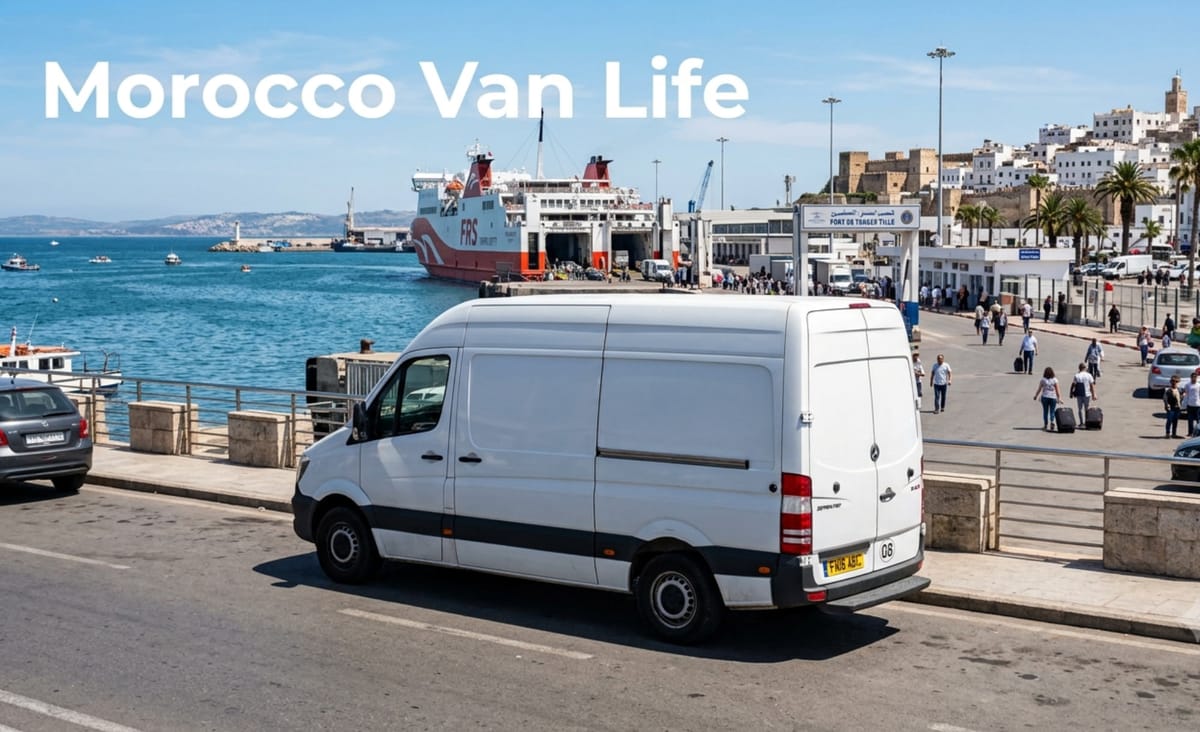
For the UK's van life community, Morocco has become the new promised land—a sun-drenched, budget-friendly alternative to Europe's increasingly regulated and expensive roads. What began as a trickle of adventurous overlanders has turned into a full-blown migration, with YouTube feeds filled with desert sunsets and Atlantic surf breaks. So what's actually driving the exodus? Having gone down the rabbit hole of ferry prices, park-up costs and a worrying number of "we sold everything and drove to the Sahara" videos, here's what keeps pulling everyone south.
Year-round sunshine and landscapes that don't quit
Unlike the UK's weather, which turns van life into a test of endurance for most of the year, Morocco offers near-guaranteed sunshine and dramatically varied landscapes within short driving distances. From the snow-capped Atlas Mountains to the golden dunes of the Sahara and the crashing Atlantic surf, the country packs tremendous geographic variety into a compact area.
Content creators particularly appreciate this, because it provides endless visually stunning backdrops. The "van valley" near Tafraoute, with its surreal blue rocks, has become iconic—perfect wild camping where nobody comes round begging or trying to sell you things, and where campfires are still permitted. Similarly, the long right-hand point break at Imsouane has become a mecca for surf-loving van dwellers, with free street parking at the top of town.
The economics of Moroccan van life
For UK van lifers used to battling parking restrictions and stealth camping, Morocco is refreshingly affordable. Wild camping has become more regulated in recent years—new laws restrict RV parking in coastal areas—but costs remain remarkably low compared to European campsites. Designated park-ups with guardians typically charge 10–30 dirhams a night (about £0.80–£2.40), rising to 50 dirhams (£4) in the touristy spots. Even formal campsites rarely exceed 90 dirhams (£7.20).
Fuel is the other big draw: diesel sits around 10–12 dirhams per litre (roughly £0.88). Combined with Morocco's compact size, that makes exploring the whole country cheaper than a fortnight of UK forecourt prices. The low cost of living extends to the food markets, where fresh produce, dates and local bread go for pennies.
Morocco van life costs at a glance
Guarded park-up
£0.80–£2.40 /night
Campsite
£7.20 max /night
Diesel
~£0.88 /litre
Hammam shower
£0.80–£1
3kg propane swap
£4.80
Ferry from Algeciras
from €35
The van life infrastructure boom
Morocco has quietly developed infrastructure that makes van life surprisingly comfortable:
- Hammams: These traditional bathhouses solve the hygiene problem of van living for just 10–12 dirhams (£0.80–£1). Where UK van lifers rely on gym memberships or truck stops, Morocco's ubiquitous hammams offer an affordable, culturally immersive wash—sometimes including a scrub-down from a no-nonsense attendant. Bring flip-flops and your own soap.
- Gas availability: Propane is available even in tiny villages—look for the "Gaz" signs. A 3kg bottle costs just 60 dirhams (£4.80), which solves a major pain point for van cooks.
- Parking guardians: Initially confusing to Europeans, Morocco's system of parking guardians (the men in yellow vests) actually provides security for overnight spots, usually for under 30 dirhams (£2.40). Many van lifers report feeling safer in these guarded spots than in anonymous European car parks.
- Digital tools: Apps like Park4Night (and other) have expanded their Morocco coverage significantly, making it far easier to find vetted overnight spots than it was even five years ago.
🔥 Morocco van life hack
Moroccan gas bottles are swapped, not refilled—and they thread the opposite way to European ones. Carry a wrench to loosen the connector or you'll be cooking on wishful thinking.
The content creator's paradise
For YouTubers and Instagrammers, Morocco is irresistible:
- Visual drama: From the blue-painted streets of Chefchaouen to the ochre hues of the desert, Morocco provides instantly recognisable backdrops that perform well on visual platforms.
- Cultural richness: Daily life—from mint tea rituals to bustling souks—offers endless storytelling potential compared to more homogenised European settings.
- Adventure narrative: Crossing from Europe to Africa by ferry, navigating chaotic Moroccan roads, and wild camping in the desert all make for compelling video arcs.
Many creators find Moroccan content performs exceptionally well, with viewers drawn to the adventure of it all. The country has become such a hotspot that some YouTubers, like Mr & Mrs Adventure, are writing entire books about their Moroccan van life experiences.
Shop via A Van Life Thing
If you buy anything on Amazon after clicking our link, we earn a small commission at no extra cost to you. It's a dead easy way to support the site while you're shopping for kit anyway.
Shop on AmazonThe cultural moment: why now?
Morocco isn't just a destination—it's a counter-movement. After years of Europe's creeping parking restrictions and campground overcrowding, the short ferry hop from Algeciras to Tangier (from just €35) has become a symbolic escape hatch. For van lifers, that 90-minute crossing marks more than a border: it's a return to the rawness that drew them to the road in the first place.
Three forces colliding
Post-pandemic rebellion. The lockdown generation is trading UK drizzle for Morocco's sun-bleached freedom—where you can park beside a 12th-century kasbah one night and a Sahara dune the next, no booking required.
Europe's van life burnout. With Spain enforcing overnight parking bans and France's aires overflowing, Morocco's guardian-protected wild spots feel liberatingly simple.
The algorithm loves adventure. YouTube's hunger for epic content has turned the Algeciras–Tangier ferry into a rite of passage—the moment a "UK van tour" becomes a North African expedition.
The shift is emotional too. For many, it's a return to what van life used to feel like before apps, crowding and regulations dulled the sense of exploration. In Morocco there are still places where you can truly go off-grid, be welcomed with a smile, and feel the thrill of the unknown.
The irony? This migration is possible precisely because Morocco remains just inconvenient enough to deter casual travellers. The ferry isn't easy—you'll navigate chaotic ports, haggle with fixers, and surrender to Moroccan time—but that friction is the point. In an age of over-tourism, van lifers crave places where arrival still feels like an achievement.
"The ferry docks in Tangier, and suddenly your van isn't just a vehicle—it's a passport to the Morocco the guidebooks miss."
The safety question nobody talks about
Yes, Morocco is generally safe—but it's not Spain. Petty theft happens (lock your van at markets), and women may face stares or harassment in rural areas. That said, van lifers consistently report feeling safer in guarded park-ups than in some European cities. Travel in loose clothing, avoid isolated spots at night, and always carry small cash for the guardians—they'll watch your van like a hawk.
The challenges: not always a desert dream
- Wild camping restrictions: Recent laws have made true wild camping difficult, especially along the coast where signs now prohibit RV parking. Campsite owners have been known to pressure wild campers onto paid sites.
- Cultural differences: Women travelling alone may feel uncomfortable, with reports of staring and gender-segregated public spaces. Conservative dress is advised outside tourist areas.
- Driving conditions: Moroccan roads are, as one van lifer put it, "absolute chaos in cities and craziness on country roads"—with unpredictable hazards from livestock to aggressive drivers.
- Payment systems: Cash is king. ATMs can be unreliable and cards are rarely accepted outside major supermarkets, so carry plenty of small bills for parking fees and markets.
The verdict: why the migration will continue
Despite the challenges, Morocco's combination of affordability, beauty and van-friendly infrastructure means it's likely to remain a top destination for UK van lifers and content creators. As more travellers share their experiences online—and as Morocco becomes increasingly familiar to the van life community—the migration shows no signs of slowing.
For those tired of the UK's parking restrictions, cold weather and high costs, Morocco offers somewhere van life can be lived more freely and more cheaply. As one traveller put it: "The further south you go, the friendlier the people, the more free park-ups you'll find, the warmer the weather and the cheaper the prices." In an era of rising living costs and increased regulation of alternative lifestyles, Morocco's open roads may represent the last frontier of true van life freedom.
If you're dreaming of the Moroccan road trip—or you've done it—I'd love to hear from you. Get in touch on X or Instagram, or drop a comment below.