Why Waiting for Your MOT to Check Your Tyres is a Costly Gamble

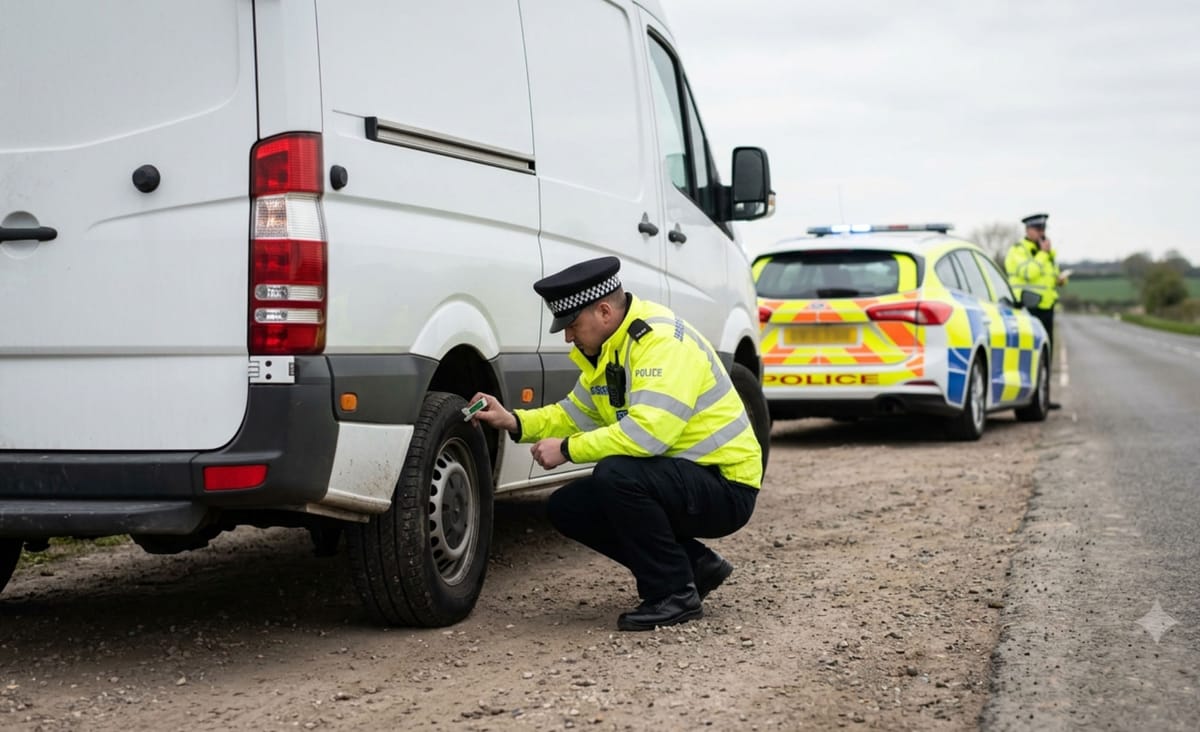
Leaving your tyres until your MOT could cost you significantly more than simply getting them changed sooner. Relying on an annual test centre inspection to tell you when your rubber is unsafe is a massive legal and financial gamble, especially it comes to your Vanlife home on wheels.
The statutory legal minimum tread depth across the UK for vans up to 3.5 tonnes is 1.6mm across the central three-quarters of the tread, around the entire circumference of the tyre. If you pass a roadside police check with a tyre below this threshold, the penalties are not issued per vehicle—they are calculated per tyre.
- The Points: Every single illegal tyre carries a mandatory 3 penalty points. If two tyres are bald, that is 6 points. If all four corners are neglected, you hit 12 points and an automatic driving ban before you leave the hard shoulder.
- The Fines: The maximum fine per illegal tyre is £2,500 for vans. A full set of non-compliant rubber can result in a £10,000 court fine and an immediate vehicle prohibition notice.
A basic digital or mechanical vernier tread depth gauge costs a few quid and sits in the glovebox. Checking the depths manually once a month takes two minutes and completely removes the risk of an unexpected MOT failure or a costly roadside citation.
Pressure Economics: Rolling Resistance and Fuel Efficiency
While correct tread depth keeps you legal, maintaining the correct tyre pressure is what directly impacts your daily running costs. Vans carry significant weight over their axles, and running tyres even slightly below the manufacturer's recommended PSI—usually found on a placard inside the driver’s door or fuel flap—actively drains your wallet.
1. The Fuel Penalty
Under-inflated tyres flatten out against the tarmac, vastly increasing rolling resistance. The engine has to work harder and burn more fuel just to overcome the friction of the soft rubber. Running tyres just 10% below their recommended pressure drops fuel efficiency by roughly 2.5% to 3%. Over thousands of miles, that translates to a substantial amount of money wasted at the pumps.
2. Wear and Structural Failure
When a van tyre lacks proper pressure, the sidewalls flex excessively under payload. This flexing generates extreme internal heat, wearing out the outer shoulders of the tread pattern prematurely. This means buying replacement tyres twice as often and drastically increases the risk of a high-speed blowout on the motorway.
The Missing Spare Wheel: Breakdown Service Realities
A large proportion of modern vans no longer ship with a physical, full-sized spare wheel underneath the chassis. Instead, manufacturers supply a temporary tyre inflator gel kit to cut production weight.
If you suffer a severe puncture, a sliced sidewall, or pothole damage that cannot be sealed with a bottle of foam, you have to call a breakdown recovery service. However, if you are travelling without a spare wheel, you need to understand the industry's standard rule of thumb regarding call-outs:
The Non-Standard Call-Out Policy: Most major breakdown providers (including the AA and RAC) state in their terms that if you call them out for a flat tyre and do not carry a serviceable spare wheel, a functional jack, or your locking wheel nut key, they are not obligated to assist you for free.
The Consequences of Calling Without a Spare:
- The Surcharge: They will usually deploy a patrol vehicle, but they often levy a heavy mandatory penalty fee (frequently between £150 and £200) on top of your standard membership because you lack basic self-recovery equipment.
- The Mobile Tyre Premium: Because the patrol cannot swap a wheel, they must coordinate a third-party mobile tyre-fitting van to come out to your location. You will be forced to pay whatever premium price that specific supplier demands for the tyre on the spot, or face an expensive flatbed tow to a local garage.
The Solution: Ditch the inflation kits. Source an OEM steel wheel that matches your bolt pattern from a breakers yard, mount a reliable mid-range tyre to it, and secure it underneath your vehicle. Having a physical spare wheel means a breakdown patrol can swap it over and have you moving again inside twenty minutes, entirely free of surcharges.
Shop via A Van Life Thing
If you buy anything on Amazon after clicking our link, we earn a small commission at no extra cost to you. It's a dead easy way to support the site while you're shopping for kit anyway.
Shop on Amazon